
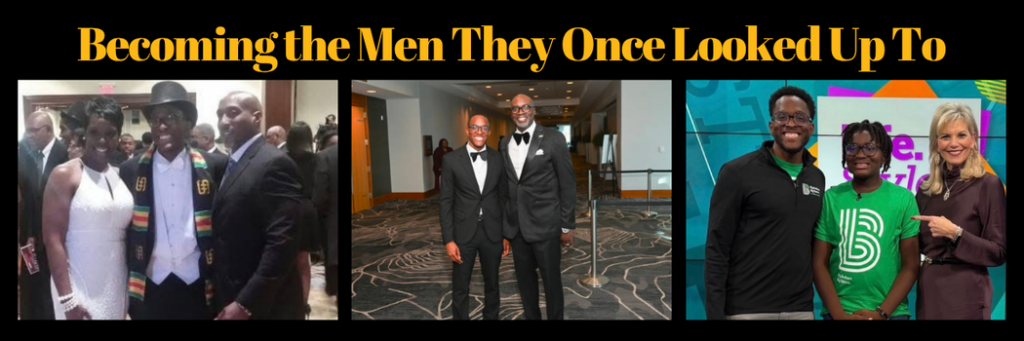
How two former 100 Black Men of Indianapolis participants are carrying the lessons of mentorship into their work with the next generation.
Eric Saunders was in middle school when a group of Black men wearing three-piece suits walked into his classroom. He didn’t know their names or fully understand everything they came to teach him. But he remembers how they carried themselves, the conviction in their voices, and their choice to be there.
“I had never witnessed men show up at my school with the intention of impacting our lives and decisions,” Eric recalled. “They met me on my level. They talked about character and the decisions we make, and they were consistent. That made an impact on me.”
Those men were volunteers with 100 Black Men of Indianapolis. Their presence reinforced lessons Eric was already learning from his grandfather and the men in his church community. More importantly, they expanded his understanding of what Black male leadership could look like.
Eric couldn’t have known then that he would eventually become one of those men, spending his own time helping young people recognize their potential. Or that a 12-year-old boy whose path he helped shape would one day be working alongside him.
Today, Eric—and his former mentee, Bryce Akridge—are colleagues at Big Brothers Big Sisters of Central Indiana, where they connect young people with the kind of relationships that shaped their own lives. But their connection began years before either man entered the nonprofit sector.
Relationships That Shape Us
Bryce remembers his mother signing him up for seemingly every youth program Indianapolis had to offer. Some he enjoyed more than others. Giving up Saturday mornings to attend The 100’s Dollars and $ense Financial Literacy Program wasn’t necessarily his idea of a good time. What kept him coming back, however, wasn’t just what he was learning about money.
“The mentors made me want to come back,” Bryce said. “They were honest and open with us. They didn’t talk down to us or tell us what to do. They were sharing their experiences and helping us understand things we hadn’t experienced yet.”
He participated in the financial literacy program for two years before joining The 100’s Beautillion Militaire Scholarship Program as a high school senior, and along the way, he developed relationships with men who would continue influencing his life long after those programs ended. One of those men was Andre Givens, a longtime member and former president of The 100.
Years after Bryce graduated from high school, Givens reached out through LinkedIn. They met for coffee, and when Bryce admitted he wanted to become more confident at networking, Givens began inviting him to events and introducing him to professionals throughout Indianapolis.
“He didn’t just tell me what I needed to work on. He put me in positions where I had to use and develop those skills,” Bryce explained. “Even now, he’s helping me think through my career and connecting me with people who can help me get where I want to go.”
Bryce hopes to lead a nonprofit organization as CEO one day. The mentorship that began when he was a teenager continues to help him prepare for that possibility. And his former mentor, Eric Saunders, understands that lasting influence.
As a Cathedral High School senior, he chose to participate in The Beautillion Militaire Scholarship Program while balancing athletics, church activities, and a job. The experience challenged him to think beyond his individual accomplishments.
“I knew what I could bring to the table, but The Beautillion wasn’t solely about that,” Eric said. “It taught me self-accountability, group accountability, and stewardship. We had to learn how to work together toward something bigger than ourselves.”
Those lessons followed him into adulthood. So did his commitment to helping other young men find their way. In fact, Eric was part of Bryce’s life long before their professional paths crossed. He knew Bryce when he was 12 and helped introduce his family to Cathedral High School, where Bryce would eventually graduate. This connection illustrates something neither man fully appreciated as a child: mentorship rarely ends when a program does.
Now It’s Their Turn to Show Up
Today, Eric serves as Manager of Volunteer Engagement at Big Brothers Big Sisters of Central Indiana, where he helps connect adults with opportunities to mentor young people. Bryce works alongside him and is also a Big Brother to an 11-year-old boy.
For Bryce, becoming a mentor has given him a new appreciation for the adults who invested in him as he grew up. He remembers the Saturday mornings his mother insisted he attend programs, even when he’d rather be somewhere else. At the time, he didn’t fully understand why those experiences mattered. Now, he makes time to show up for someone else.
“I think people believe they have to have their whole life figured out to become a mentor,” Bryce said. “But kids don’t need somebody who’s perfect. They need somebody who’s authentic. Somebody who shows up and lets them know it’s okay to make mistakes.”
That lesson became especially clear when Bryce began spending time with his Little Brother. They would go on outings together, sometimes to Culver’s, and Bryce wasn’t always sure whether their time was making a difference. Then the boy’s mother told him about the impact he was having.
“You might not see it immediately,” Bryce explained. “You might not hear thank you or know what that young person is thinking. But showing up at a game, sending a text, or just spending time together can mean more than you realize.”
For Eric, that willingness to be present is what separates the idea of mentorship from the commitment it requires.
“Our mentors showed up for us because they saw the bigger picture,” he said. “They understood there were young men like us who needed guidance and affirmation. That’s what I want people to understand today. You have a part to play in the lives of young people, but you have to be willing to show up.”
That commitment matters. In fact, Big Brothers Big Sisters of Central Indiana shared that approximately 1,000 young people are currently waiting to be matched with mentors in Central Indiana. Through its longstanding partnership with The 100 Black Men of Indianapolis, the organization is extending its reach. In fact, The 100’s Team Mentoring program, hosted at Big Brothers Big Sisters, allows young people on the waiting list to participate in group mentoring and begin building relationships while awaiting individual matches.
For Eric and Bryce, the partnership means more than organizational collaboration. They are helping create opportunities similar to the ones that shaped them.
Looking to the Future
When Bryce thinks about the young people he works with today, he hopes they will pursue their ambitions, build meaningful lives, and eventually recognize the importance of helping someone else do the same.
“None of this is sustainable unless we’re pouring into the next generation,” he said. “We all don’t start close to the finish line. Sometimes it takes somebody helping you get there.”
Eric sees that responsibility through the memory of those men who walked into his middle school decades ago. They didn’t know which boys would remember their words or where those boys would eventually go. They simply understood that their presence mattered enough to keep coming back.
Today, Eric and Bryce are carrying that commitment forward, not because someone asked them to repay a favor, but because they understand what those relationships made possible in their own lives.
The men who once showed up for them couldn’t have known exactly who they would become. But they showed up anyway.